Your filter is the part of the system most likely to be quietly failing. As cartridges load up with debris and oils, water flow drops, pressure climbs, and the whole pool circulates less — which makes chemistry harder to hold and algae easier to start.
The clearest signal is pressure. Note what your filter gauge reads right after a cleaning, and clean it again when the pressure rises noticeably above that baseline. Weak returns, a slow-moving vacuum, or a heater that shuts down on low flow are all the same message in different words.
Cartridges need to be pulled, washed down to clean pleats, and inspected while they are out. Cleaning cannot fix a cartridge with torn media or collapsed ends — at that point the element needs replacing, and washing it again just delays the diagnosis.
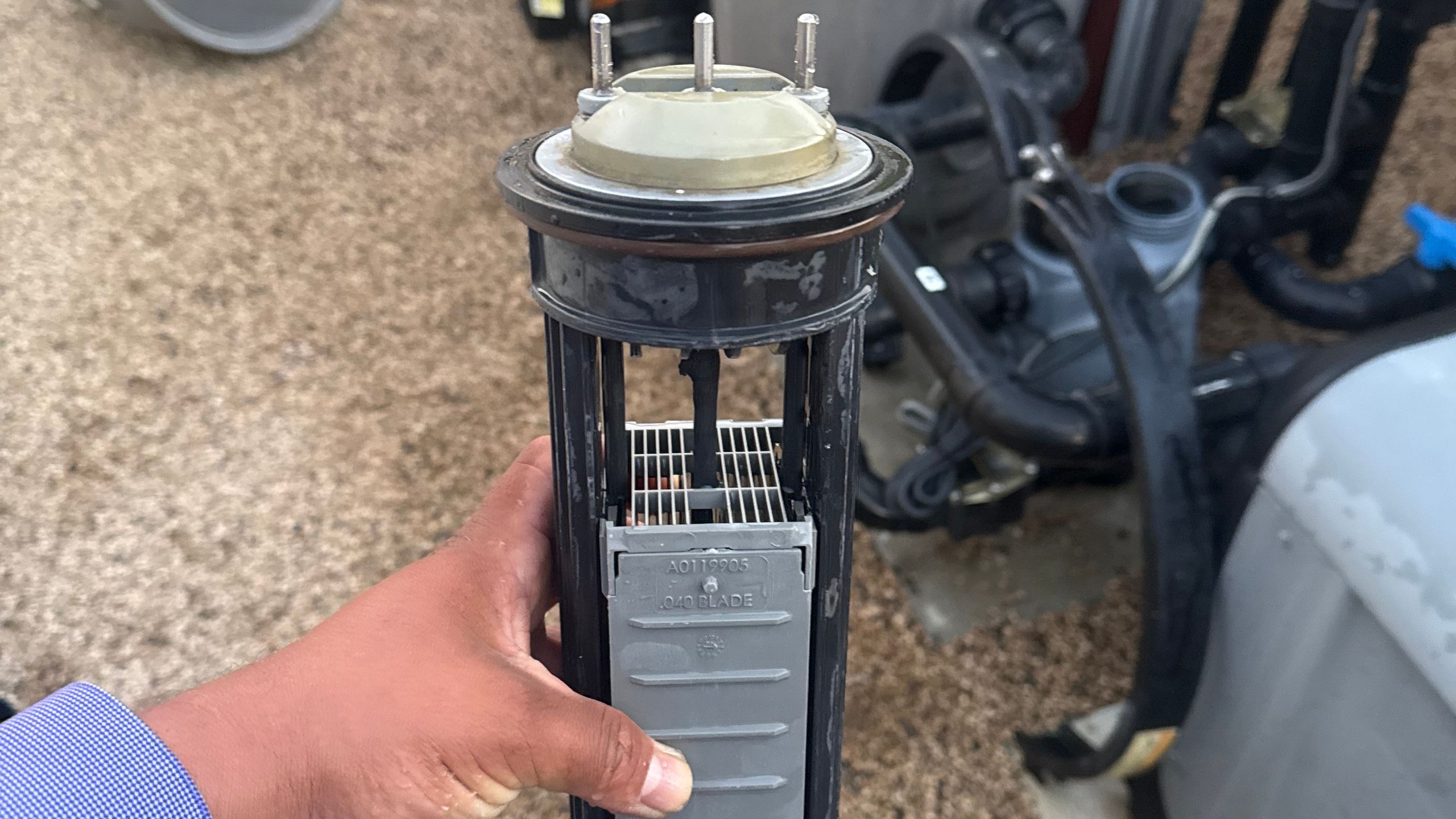
Salt cells need their own attention. Calcium builds up on the plates over time and the cell gradually stops producing chlorine, which looks exactly like a chemistry problem until someone opens the cell and looks. Regular inspection and cleaning keeps a salt system producing the way it should.
Heavy scale and buildup on surfaces or equipment sometimes calls for a chlorine wash. It is not a routine step, but when buildup has gone past normal cleaning it restores the surface instead of masking the problem.
If your pressure is climbing, your flow is weak, or your salt system is not keeping up, we can pull the filter, wash it out, and tell you what condition it is really in.